 By Weltrix
India’s clinical research sector has been building real momentum over the past decade. Not just in patient recruitment or cost advantages, but specifically in the technical and scientific backbone of trials: biometrics. Global sponsors are paying attention, and the shift is more deliberate than it looks from the outside.
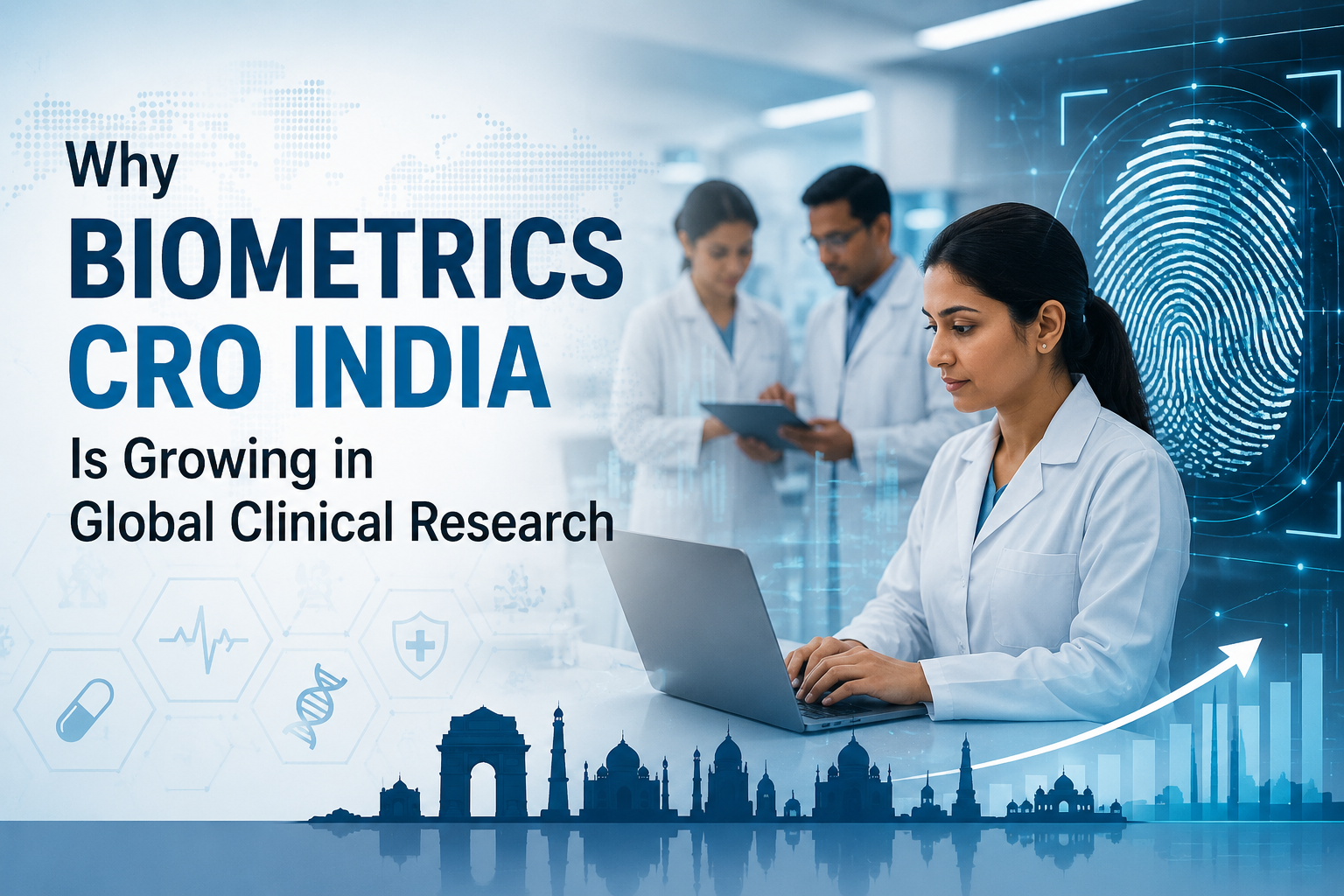
The rise of Biometrics CRO India isn’t a trend that appeared overnight. It’s the result of accumulated scientific talent, regulatory convergence, and a quiet but steady infrastructure investment that has made Indian CROs credible partners for Phase I through Phase IV studies across North America, Europe, and beyond. Understanding why requires looking at what biometrics for clinical trials actually involves in a clinical trial context, and why the skill set required to do it well has concentrated in India over the past fifteen years.
What Clinical Trial Biometrics Actually Covers
People sometimes use the term loosely, so it’s worth being specific. In clinical research, biometrics refers to the statistical and data science disciplines that shape how trials are designed and how their results are interpreted. This includes:
- Biostatistics: trial design, sample size estimation, statistical analysis plans, and final study reports
- Clinical data management: case report form design, database build, data cleaning, and lock
- Statistical programming: TLF production, CDISC-compliant datasets (SDTM, ADaM), and submission-ready packages
These aren’t support functions. They determine whether a study gets approved. A poorly constructed statistical analysis plan, a database with reconciliation gaps, or a non-compliant ADaM dataset can delay or sink a submission. The stakes are high, and the work requires people who have been through the process enough times to know where things go wrong.
The Real Reason Global Sponsors Are Looking at India
Yes, operational costs in India are lower than in the US or Western Europe. But sponsors who choose Indian CRO partners for biometrics are increasingly motivated by something else: depth of expertise. Indian biostatisticians routinely work on NDA and MAA submissions. Statistical programmers with 8 to 10 years of experience in SAS, R, and Python are not rare here. The talent pipeline is real, and it has been producing professionals who work to ICH E9, E6(R2), and FDA guidance standards for years.
What has changed recently is that the profile of work coming out of India has shifted upward. It’s less “offshore support” and more “primary delivery.” Sponsors who started by sending validation work or secondary programming to Indian teams a decade ago are now routing full statistical analysis plans and submission packages through the same partners. That’s a significant change in how the relationship is structured, and it reflects an earned confidence rather than a cost decision.
The other factor is time zone coverage. A US-based sponsor working with an Indian biometrics CRO can effectively run near-continuous operations during a critical database lock or submission crunch. That’s a practical operational advantage that compounds over the course of a long study.
Where Data Management, Clinical Research India Has Matured
Database design and EDC management were early strengths. Indian data management teams became proficient with Medidata Rave, Oracle InForm, and Veeva Vault EDC when these platforms became industry standard. The discipline now extends well beyond that foundation. It includes:
- Protocol deviation tracking and medical coding using MedDRA and WHODrug
- SAE reconciliation and external data integration from labs, ePRO, and wearables
- Database lock procedures aligned with FDA 21 CFR Part 11 compliance
- Data review meetings with medical monitors and sponsor teams
- Discrepancy management workflows that minimize last-minute query bursts before lock
But the more interesting development in recent years is in centralized statistical monitoring. As risk-based monitoring became the expected approach under ICH E6(R2), Indian clinical data management teams built genuine capability in statistical signal detection, site performance analytics, and data review flagging. This is not peripheral work. It’s increasingly central to how modern trials are run, and having a biometrics team that understands both the data management and statistical monitoring layers is a meaningful operational advantage.
Regulatory Alignment Matters More Than People Realize
One concern sponsors have historically raised about working with Indian CROs: will they understand FDA or EMA expectations well enough for a submission-critical deliverable?
For credible Indian CROs, the answer is yes. And the reason is straightforward. The major regulatory agencies publish their guidance publicly. ICH harmonization has created a common technical language across regions. Indian biostatisticians preparing ADaM datasets or writing statistical analysis plans are working from the same FDA technical specifications as their US counterparts. The CDISC standards don’t have a geography.
What separates strong Indian CROs from weaker ones is the same thing that separates any CRO: quality systems, senior oversight, and the discipline to escalate problems early rather than paper over them. That’s an organizational quality. It has nothing to do with where the office is located.
The Indian CROs that have built sustained relationships with global pharma companies have invested heavily in regulatory training, internal audit programs, and quality management systems that mirror what sponsors run internally. They have also invested in people who have seen enough submissions to know when something needs to be flagged to the sponsor versus resolved internally. That institutional knowledge takes years to build and can’t be replicated by assembling a team quickly.
What Good Biometrics Solutions Look Like in Practice
Sponsors evaluating biometrics solutions from a CRO partner should be asking practical questions, not theoretical ones. A few that reveal a lot:
- How does your team handle protocol amendments mid-study that require changes to the SAP?
- What’s your process for unblinded statistician involvement during interim analyses?
- Can you walk through a sample SDTM annotated CRF and explain how your programming team implements it downstream?
- What therapeutic areas does your biostatistics team have actual submission experience in, and at what phase?
Strong Indian CROs will answer these with specifics, not generalities. If the responses are vague or pivot immediately to process slides, that matters more than any credential.
The best biometrics solutions are built around clear documentation, proactive sponsor communication, and a disciplined approach to data quality that doesn’t wait for database lock to surface problems. Data managers who run regular metric reports, flag site anomalies early, and come to review meetings with actual analysis are doing the job properly. Statistical programmers who build validation programs as they go rather than at the end are doing the job properly. These are habits, not systems. Indian teams that have cultivated them produce work that holds up under regulatory scrutiny.
The Scale Advantage Is Real, but Context Matters
India produces a large number of graduates in statistics, mathematics, life sciences, and computer science every year. That scale creates a talent base that allows CROs to grow without the workforce bottlenecks that constrain expansion in smaller markets. When a sponsor needs to staff a complex oncology program with three parallel studies, finding five qualified biostatisticians and ten programmers is not a six-month problem in India the way it might be elsewhere.
But scale without quality infrastructure is just noise. The Indian CROs that have built lasting relationships with global pharma clients have done so by investing in structured training programs, mentorship from senior staff with submission experience, and quality oversight at every stage of delivery. The ones that haven’t done this work are identifiable quickly. Turnover is high, deliverable quality is inconsistent, and escalation patterns reflect teams that don’t have the confidence to raise issues early.
Sponsors do due diligence on this. The audit gap between a well-run Indian CRO and a poorly run one is significant, and the cost savings disappear fast if re-work eats into timelines. This is one of the reasons sponsors outsource to biometrics CROs with a demonstrated track record rather than the lowest bidder.
Why Weltrix Works in This Context
Weltrix operates at the intersection of where Indian biometrics capability has genuinely matured: rigorous data management, submission-ready statistical deliverables, and a team with therapeutic area experience spanning oncology, CNS, and metabolic disease. The work is built on the same technical standards sponsors expect from any credible global partner, with the operational advantages that come from a team that has been running clinical trial biometrics at this level long enough to have encountered most of what can go wrong.
The client relationships Weltrix has built aren’t based on cost alone. They’re based on what happens when a database lock is approaching under time pressure, when an interim analysis needs unblinded handling with airtight documentation, or when a regulatory query on a submitted dataset requires a defensible answer in 48 hours. That kind of reliability is earned through experience, not promised through a capabilities deck.
Where This Is Heading for Global Sponsors
Global pharma and biotech companies have moved from cautious exploration to deliberate strategy when it comes to Indian biometrics partners. The question is no longer whether Indian CROs can deliver clinical trial biometrics at a submission-ready standard. It’s which Indian CROs have the systems, the people, and the institutional discipline to do it consistently across programs.
For sponsors building or expanding their CRO networks, Biometrics CRO India represents a serious primary delivery option, not just a cost-efficient add-on. The sponsors who have recognized this earliest are building structural advantages into how they run trials. Shorter timelines, better data quality visibility, and experienced teams who have seen similar problems before are compounding benefits over the course of a development program.
Weltrix is part of that story. Not because the geography is convenient, but because the work holds up when it matters most.
Leave A Comment