
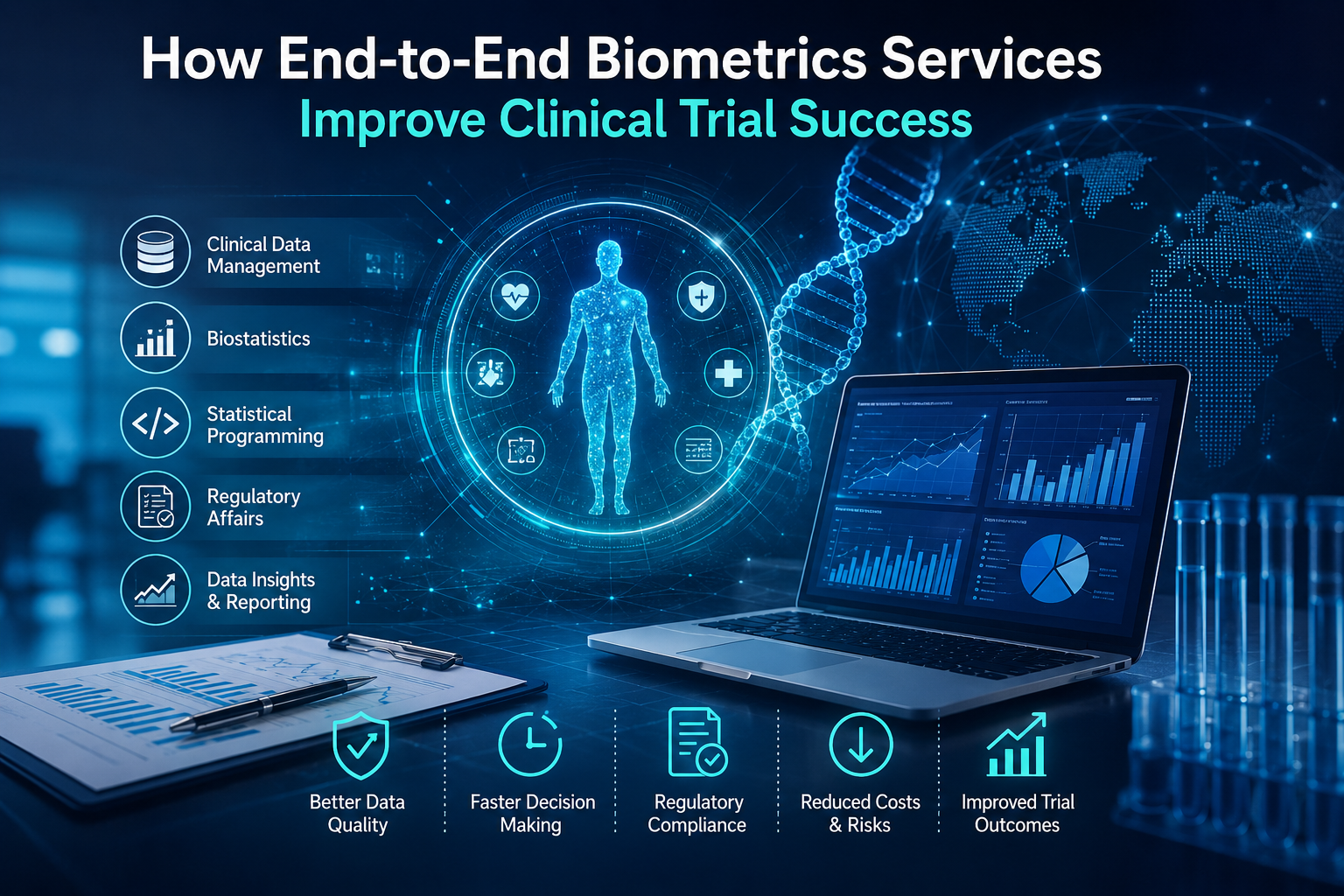
 By Weltrix
The clinical research industry is under increasing pressure to accelerate drug development, reduce trial costs, ensure regulatory compliance, and deliver innovative treatments to patients faster than ever before. As clinical trials become more complex, involving global study sites, decentralized trial models, wearable technologies, and vast volumes of patient data, organizations must rely on robust data-driven processes to maintain accuracy and efficiency.
Whether you’re a pharmaceutical company, biotechnology startup, medical device manufacturer, or CRO, understanding the value of integrated biometrics services can help improve study performance and increase the likelihood of regulatory and commercial success.
What Are End-to-End Biometrics Services?
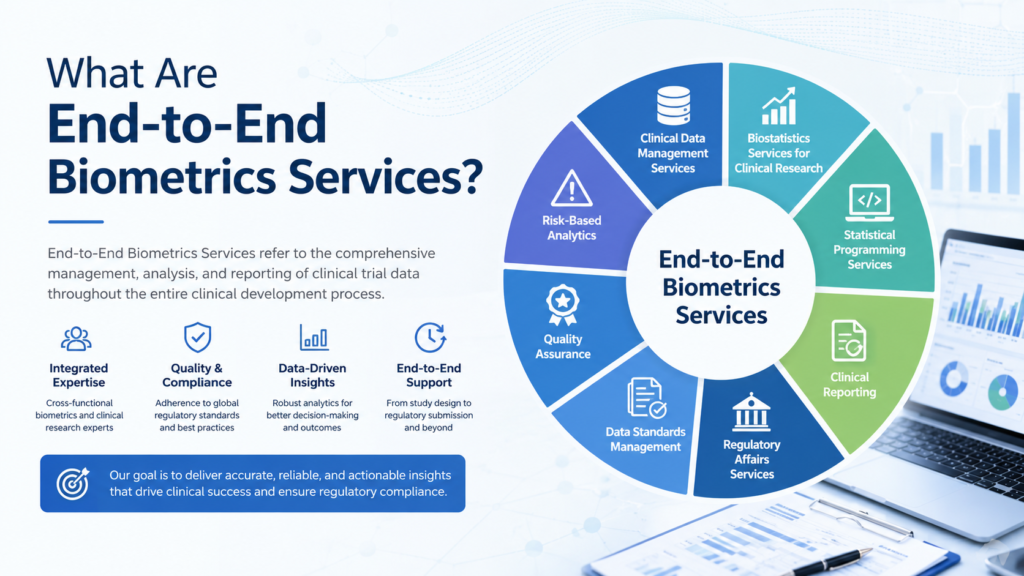
End-to-End Biometrics CRO Services refer to the comprehensive management, analysis, and reporting of clinical trial data throughout the entire clinical development process.
These services typically combine:
- Clinical Data Management Services
- Biostatistics Services for Clinical Research
- Statistical Programming Services
- Clinical Reporting
- Regulatory Affairs Services
- Data Standards Management
- Quality Assurance
- Risk-Based Analytics
Instead of operating in isolated departments, these functions work together under a unified strategy, ensuring consistency, compliance, and efficiency across all trial phases.
The ultimate objective is to generate high-quality, reliable clinical evidence that supports regulatory submissions and informed business decisions.
The Growing Importance of Biometrics in Clinical Research
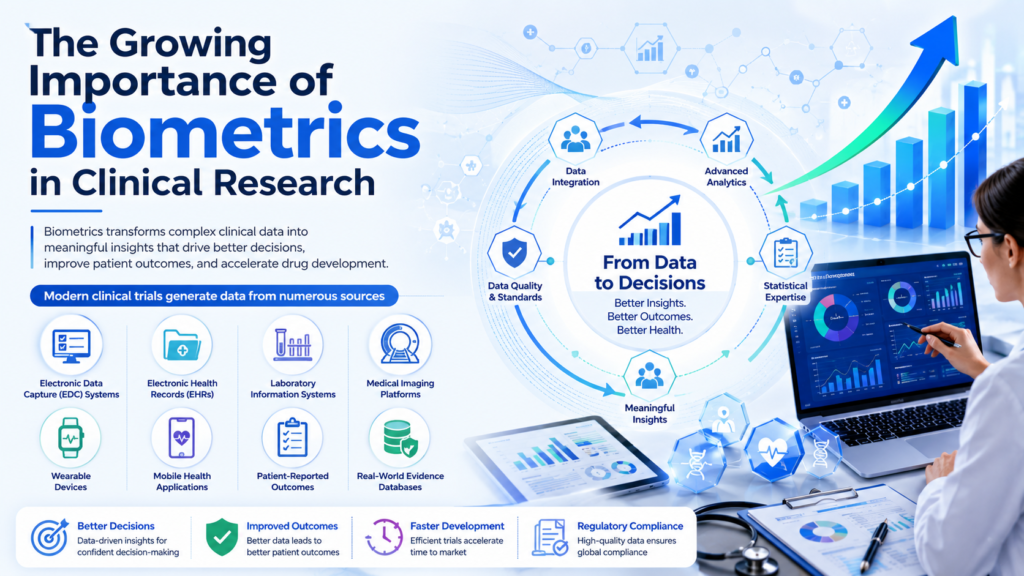
Modern clinical trials generate data from numerous sources, including:
- Electronic Data Capture (EDC) systems
- Electronic Health Records (EHRs)
- Laboratory information systems
- Medical imaging platforms
- Wearable devices
- Mobile health applications
- Patient-reported outcomes
- Real-world evidence databases
Managing these diverse datasets requires specialized expertise and advanced analytical methodologies.
Without effective biometrics processes, organizations may encounter:
- Data inconsistencies
- Protocol deviations
- Delayed database locks
- Increased monitoring costs
- Regulatory deficiencies
- Delayed product approvals
Integrated biometrics solutions address these challenges by providing a structured framework for collecting, validating, analyzing, and reporting clinical data.
Key Components of End-to-End Biometrics Services
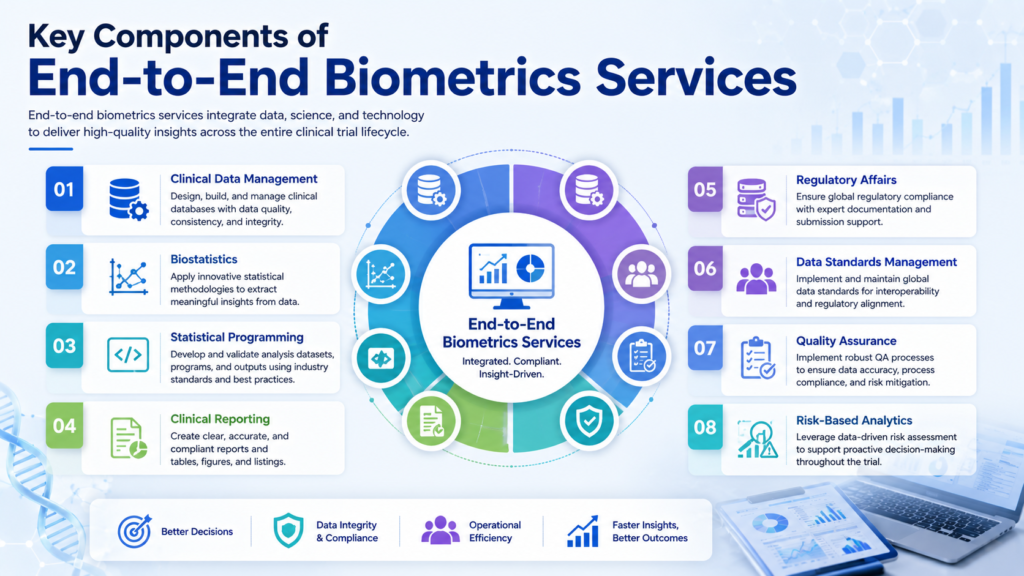
- Clinical Data Management Services
Clinical data management serves as the backbone of every successful clinical trial.
The primary objective of clinical data management services is to ensure that trial data is accurate, complete, consistent, and ready for statistical analysis.
Core Responsibilities
Clinical data management teams handle:
- Database design and setup
- Electronic Case Report Form (eCRF) development
- Data validation rule creation
- Query generation and resolution
- Medical coding
- Data reconciliation
- Database lock preparation
High-quality data management minimizes errors and ensures that study conclusions are based on reliable information.
Business Impact
Organizations with effective clinical data management practices often experience:
-
- Faster database lock timelines
- Improved data quality
- Reduced monitoring costs
- Better audit readiness
- Enhanced regulatory compliance
- Biostatistics Services for Clinical Research
Biostatistics is one of the most critical disciplines within clinical development.
Biostatistics services for clinical research help determine whether an investigational treatment is safe and effective while ensuring scientific validity.
Key Activities
Biostatisticians support:
- Protocol design
- Endpoint selection
- Sample size calculations
- Randomization strategies
- Statistical Analysis Plan (SAP) development
- Interim analyses
- Final efficacy and safety analyses
Why Biostatistics Matters
Poor study design can compromise trial outcomes regardless of data quality.
Experienced biostatisticians help organizations:
- Avoid underpowered studies
- Reduce bias
- Improve study efficiency
- Support regulatory acceptance
Their expertise directly influences trial success rates and approval potential.
- Statistical Programming Services
Clinical research generates massive datasets that must be converted into regulatory-compliant outputs.
Statistical programming services play a crucial role in preparing, transforming, and analyzing clinical data.
Primary Deliverables
Statistical programmers create:
- SDTM datasets
- ADaM datasets
- Tables
- Listings
- Figures (TLFs)
- Integrated summaries
Regulatory Standards
Programs are typically developed according to industry standards such as:
- CDISC SDTM
- CDISC ADaM
- FDA submission requirements
- EMA submission standards
Automated programming workflows improve efficiency, reduce manual errors, and accelerate reporting timelines.
- Regulatory Affairs Services Integration
Regulatory success depends heavily on accurate, well-organized data and documentation.
Integrating regulatory affairs services with biometrics operations helps organizations maintain submission readiness throughout the study lifecycle.
Regulatory Support Includes
- Submission planning
- Data standards compliance
- Regulatory document preparation
- Inspection readiness
- Health authority communication support
This integrated approach minimizes submission risks and improves approval outcomes.
How End-to-End Biometrics Services Improve Clinical Trial Success
1. Improved Data Quality and Integrity
Data quality remains one of the most important factors influencing clinical trial success.
End-to-end biometrics teams establish quality controls throughout the study lifecycle.
Examples include:
- Real-time edit checks
- Automated validations
- Data reconciliation processes
- Centralized review procedures
This proactive approach reduces discrepancies and strengthens confidence in trial findings.
2. Faster Clinical Trial Execution
Delays in data cleaning, statistical analysis, or reporting can significantly impact development timelines.
Integrated biometrics services accelerate:
- Data review cycles
- Interim analyses
- Database lock activities
- Clinical study report generation
Sponsors can make faster decisions and potentially reduce overall development timelines.
3. Enhanced Regulatory Compliance
Global regulatory agencies continue to increase expectations regarding data quality and transparency.
End-to-end biometrics services support compliance with:
- ICH E6 Good Clinical Practice
- ICH E9 Statistical Principles
- CDISC standards
- FDA guidance
- EMA requirements
This reduces regulatory risks and improves submission quality.
4. Better Risk Management
Modern clinical trials face numerous operational and scientific risks.
Biometrics teams leverage advanced analytics to identify:
- Missing data trends
- Site performance issues
- Safety signals
- Protocol deviations
Early identification allows corrective actions before problems escalate.
Improved Decision-Making Through Advanced Analytics
Modern biometrics platforms provide sponsors with actionable insights.
Advanced analytics can help answer questions such as:
- Which sites are underperforming?
- Are enrollment targets on track?
- Are safety concerns emerging?
- Is treatment efficacy meeting expectations?
These insights support more informed and timely decisions.
Benefits of End-to-End Biometrics Services
| Benefit | Impact |
|---|---|
| Better Data Quality | More reliable clinical outcomes |
| Faster Database Lock | Reduced study timelines |
| Improved Compliance | Stronger regulatory submissions |
| Cost Reduction | Lower operational expenses |
| Better Analytics | Improved strategic decisions |
| Increased Efficiency | Faster trial execution |
| Risk Mitigation | Fewer delays and compliance issues |
| Enhanced Collaboration | Better communication across teams |
Best Practices for Implementing End-to-End Biometrics Services
1. Involve Biometrics Teams Early – Biostatisticians and data managers should participate during protocol development.
2. Standardize Data Collection – Implement CDISC standards from study initiation.
3. Utilize Automation – Leverage AI-driven tools for data cleaning, validation, and reporting.
4. Focus on Data Quality – Develop comprehensive quality management frameworks.
Maintain Regulatory Alignment- Regularly review evolving global regulatory requirements.
Industry Trends Shaping Clinical Biometrics
1. Artificial Intelligence and Machine Learning
AI is transforming biometrics by enabling:
- Automated data cleaning
- Predictive analytics
- Signal detection
- Risk forecasting
2. Decentralized Clinical Trials
Remote monitoring technologies require advanced biometrics strategies to manage distributed data sources.
3. Real-World Evidence Integration
Sponsors increasingly combine clinical trial data with real-world evidence to strengthen submissions.
4. Cloud-Based Biometrics Platforms
Cloud solutions improve:
- Collaboration
- Scalability
- Data accessibility
- Operational efficiency
Frequently Asked Questions (FAQ)
Q. What are End-to-End Biometrics Services?
End-to-End Biometrics Services integrate data management, biostatistics, statistical programming, and regulatory support throughout the clinical trial lifecycle.
Q.Why are clinical biometrics services important?
They ensure data quality, scientific validity, regulatory compliance, and efficient trial execution.
Q.What do biostatistics services for clinical research include?
They include study design, sample size calculation, statistical analysis planning, interim analysis, and final reporting.
Q.How do clinical data management services improve trial quality?
They ensure accurate, complete, and validated data that supports reliable analyses and regulatory submissions.
Q.What are statistical programming services?
These services create analysis-ready datasets and generate regulatory-compliant reports, tables, listings, and figures.
Q.How do regulatory affairs services support biometrics?
They help ensure data and documentation meet global health authority requirements.
Q.Can end-to-end biometrics reduce clinical trial costs?
Yes. Improved efficiency, reduced rework, and streamlined workflows help lower operational expenses.
Q.What technologies are shaping the future of biometrics?
Artificial intelligence, machine learning, cloud computing, real-world evidence integration, and decentralized clinical trial technologies.
Leave A Comment