 By Weltrix
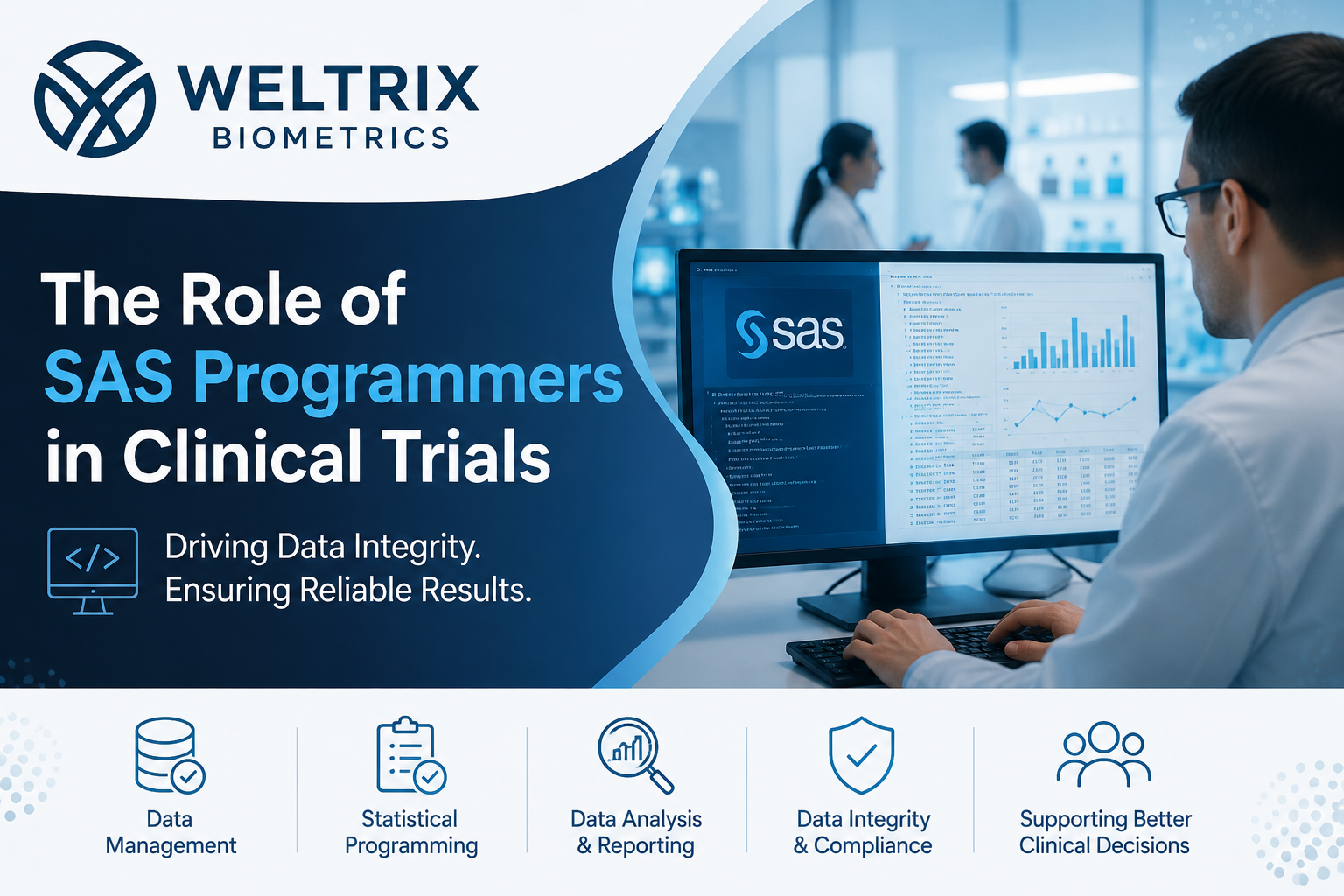
In clinical trials, a SAS programmer observes undigested change facts in statistical tables, lists, and numbers used by regulators to evaluate a drug or device. SAS programming for scientific experiments covers the entirety from SDTM and ADaM data set creation to output validation to protocol specifications. Contributors rely on this function to move from a database lock to a submission-ready package without errors that delay approval. Located at the intersection of clinical information management, biostatistics, and regulatory reporting, the role is the most technical specialty within any clinical program. Without proper SAS output, no statistical ending can be depended on in any problem.
A market file by Astute Analytica showed that more than 5,000 clinical trials start every 12 months, costing something like $19 million per routine and running six to seven years from the first affected person to the final report. This level of funding leaves virtually no room for program errors that push resubmissions or audit results. This article explains what SAS programmers actually do, how statistical programming services fit into the design of a clinical programming CRO, and what to look for when deciding on sponsors and partners.
What Does a SAS Programmer Do in Clinical Trials
A SAS programmer writes and validates code that transforms raw clinical records into standardized data sets and statistical reports. This involves building Study Data Tabulation Model (SDTM) data sets from the raw electronic statistical capture output, followed by deriving Analysis Data Model (ADaM) data sets, which are immediately fed into the statistical evaluation.
The programmer also generates tables, lists, and figures (TLFs) precisely within the statistical analysis program, independently validating each output against other programmers’ code. This duplicate programming step is a common practice throughout the enterprise.
Why SAS Programming for Clinical Trials Matters for Data Integrity
Regulatory groups, including the FDA and EMA, calculate data that is submitted in a CDISC-compliant manner. SAS programming for clinical trials is the mechanism that enables this standardization at scale, across clinical areas, trial levels and global websites. Weltrix embraces this with greater intensity by assessing common statistical errors in clinical trials and ways to steer clear of them.
From Raw Data to Regulatory Submission
Raw trial information comes from multiple assets: digital records take orders, lab feeds, imaging providers, patient-reported final results. A SAS programmer reconciles those resources and maps everything directly into a static structure before a biologist makes an assessment.
Statistical Programming Services vs Generalist Data Support
Not all statistical teams can provide CDISC-compliant, submission-ready output. Statistical Programming Services refers to a dedicated specialty usually composed of programmers who have retained in-depth knowledge in SDTM, ADaM and outline.Xml specifications, with a preference for extensive registration process or IT assistance.
Where a Dedicated Statistical Programming Service Adds Value
A committed carrier minimizes changes because developers are already proficient in FDA and PMDA submission requirements. Sponsors working with specialized statistical programming and evaluation proposal teams typically see fewer record requests during the verification stage, given that tracking requirements is built into the process at the first line of code instead of being edited later.
Clinical Programming CRO Model: In-House vs Outsourced
Sponsors generally choose between building an in-house programming team or partnering with a clinical programming CRO. The right choice depends on trial volume and therapeutic complexity. The table below summarizes the main differences sponsors weigh.
| Factor | In-House Team | Clinical Programming CRO |
|---|---|---|
| Setup Time | Months to hire and train | Immediate access to trained staff |
| Cost Structure | Fixed salaries year-round | Scales with trial workload |
| Standards Expertise | Depends on internal hiring | Cross-trial CDISC and regulatory exposure |
| Scalability | Limited by headcount | Flexible across multiple concurrent studies |
| Regulatory Exposure | Single sponsor’s submission history | Exposure across FDA, EMA, and PMDA filings |
Many mid-size sponsors outsource to a clinical programming CRO specifically to gain that cross-study regulatory exposure without carrying full-time headcount between trials.
Skills and Standards Every SAS Programmer Must Follow
Key requirement: CDISC compliance is non-negotiable. A qualified SAS programmer works to the CDISC SDTM and ADaM standards, is aware of the framework.Xml specifications, and follows the documentation requirements of Good Clinical Practice. Developers additionally need to use independent duplicate programming to validate the output so it is still business smart to catch anomalies before database locks.
Beyond technical skills, developers need to be familiar with medical space endpoints. Oncology trials require separate derived variables than cardiovascular or rare disease trials, and unfamiliarity introduces risks in assessment. Weltrix’s overview of the importance of clinical programming in CROs includes how this expertise shapes staffing choices.
Choosing the Right Clinical Programming CRO Partner
Sponsors evaluating a clinical programming CRO should ask about therapeutic area experience, validation methodology, and prior submission history with the relevant regulatory agency. A partner’s track record with clinical data management services and clinical biostatistics services matters as much as its programming bench strength, since these functions depend on each other. Weltrix’s guide on choosing the right clinical biometrics CRO covers this in more detail.
Frequently Asked Questions
Sponsors and clinical operations teams often have specific, practical questions before selecting a programming partner. The answers below address the most common ones.
What Does SAS Stand For in Clinical Trials?
SAS originally stood for Statistical Analysis System, a software application platform that was widely used throughout the pharmaceutical and CRO industries for registry monitoring and statistical evaluation. In scientific experiments, it is the primary language used to generate SDTM and ADaM data sets, tables and figures needed for regulation.
How Much Does Statistical Programming Cost for a Clinical Trial?
Costs are primarily based on the trial block, medical complexity, and whether the work is processed in-house or through a CRO. Programming is usually billed as part of a comprehensive statistical programming bid bundle as opposed to a standalone line item. Sponsors must request a scope that separates SDTM, ADaM, and TLF images, on the basis that each consists of a specific campaign.
Is SAS Still the Standard for Clinical Programming?
Yes, SAS is still the dominant language in regulatory clinical trial submissions, probably due to the fact that agencies like the FDA built many years of trial infrastructure around it. Some CROs now use R with SAS for study evaluation, yet SDTM, ADaM, and submission-ready outputs are generated in SAS.
What Is the Difference Between SDTM and ADaM Programming?
SDTM (Study Data Tabulation Model) programming organizes raw collected information into a standardized, presentation-ready form that reflects how the records were collected. Both are required for FDA submissions, and errors in either step can stall the submission.
Do Small Biotech Companies Need a Dedicated Clinical Programming CRO?
Small biotech companies with limited internal statistical pools of workers usually benefit from outsourcing to scientific programming CROs instead of hiring a full-time team for a trial. This gives them access to CDISC-trained programmers without the day-to-day cost of permanent headcount. As the amount of experience increases, a few supporters have moved to a hybrid model.
Leave A Comment